Good Intentions, Bad Outcomes: The Renovation Mistakes Hanover Sellers Regret Most
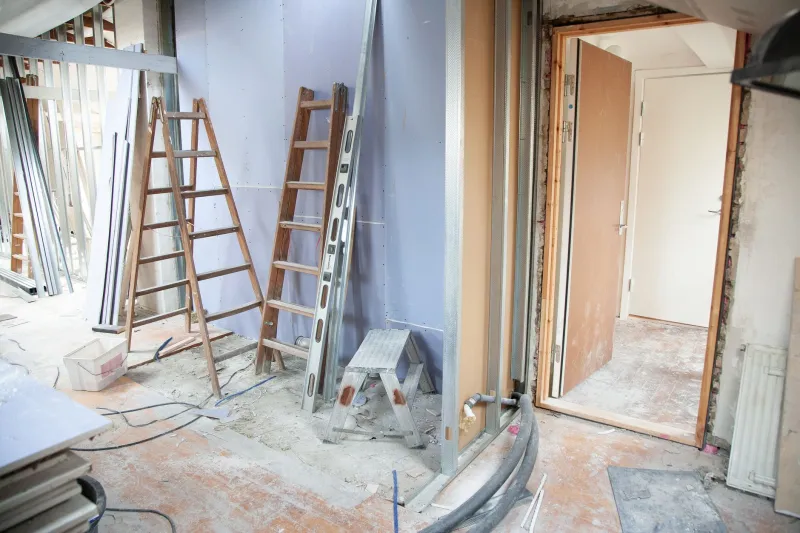
Every homeowner who's ever watched a renovation show knows the feeling: you walk through your house with fresh eyes, see the potential in that unfinished basement or the dated kitchen, and start mentally sketching a transformation. The excitement is real. The intentions are good.
And sometimes, the results are a problem.
Hanover's housing market is competitive enough that buyers have options — which means they also have opinions. They notice things. They ask questions. And when they or their inspector turns up work that wasn't permitted, finishes that don't match, or layouts that don't make sense, those discoveries have a way of showing up in lower offers, extended negotiations, or deals that fall apart entirely.
Here's an honest look at where renovation enthusiasm goes sideways — and what Hanover sellers can do differently.
The Permit Problem Is Bigger Than You Think
Unpermitted work is one of the most common and most costly surprises in a home sale. It happens more often than people realize, usually not out of malice but out of a desire to save time and money during the project itself.
The thinking goes: it's my house, it's a straightforward job, and pulling permits is slow and expensive. So the homeowner skips the process, the work gets done, and life moves on.
Fast forward to the sale. A buyer's inspector finds the addition, the finished basement, or the electrical panel upgrade. They ask for permits. The seller can't produce them. Now what?
In the best case, the seller retroactively permits the work, which can require opening walls, proving compliance, and paying fees that are sometimes significantly higher than the original permit would have cost. In a harder case, the work doesn't meet current code, and the seller is on the hook for bringing it up to standard — or disclosing the deficiency and accepting a lower price.
In Hanover specifically, buyers are increasingly savvy about this issue. Many are working with agents who specifically advise them to ask about permits on any finished space that wasn't part of the original construction. If you've done unpermitted work, get ahead of it before you list.
Over-Improving for the Street
There's a real estate concept called over-improvement — spending more on a home than the neighborhood's price ceiling will allow you to recoup. It's surprisingly easy to fall into, especially in a market where you've watched values climb and feel confident about your home's worth.
Imagine a family in a Hanover neighborhood where comparable homes sell between $350,000 and $400,000. They invest $80,000 in a full kitchen and master suite renovation, bringing their total cost basis to $420,000. But buyers shopping in that neighborhood have a ceiling in mind — and no matter how beautiful the kitchen is, they're unlikely to stretch significantly past what similar homes are selling for.
The renovation wasn't bad. The house looks great. But the return on investment simply isn't there, because the neighborhood sets the expectation, not the finishes.
Before committing to a major renovation with resale in mind, it's worth having an honest conversation about where your home sits relative to the market. Sometimes the smart move is a more modest refresh that brings the home to neighborhood standard rather than above it.
Personalization That Doesn't Travel
This one is harder to talk about because it often involves decisions homeowners love. The bold accent wall. The custom tile mural in the entryway. The converted garage turned into a dedicated home theater with no exit to the backyard. The hot tub room addition that replaced a fourth bedroom.
These choices can make a home deeply personal and genuinely enjoyable to live in. But they can also narrow your buyer pool considerably.
Buyers trying to imagine themselves in a space have a harder time when that space is loudly expressing someone else's taste or lifestyle. Neutral doesn't mean boring — it means accessible. Homes that feel like a canvas tend to attract more interest and more competitive offers than homes that feel like they require a specific kind of buyer.
The rule of thumb worth keeping in mind: the more specialized or reversible your renovation is, the more you should think about whether it's adding value or just adding character.
The Mismatched Renovation Problem
Another pattern that shows up in Hanover listings — and creates friction with buyers — is the partial or mismatched renovation. One room has been beautifully updated while the adjacent space looks like it hasn't changed since 1995. Or the kitchen has brand-new appliances and countertops, but the flooring throughout the rest of the main level is worn and inconsistent.
Buyers are quick to do math on what it will cost them to bring everything up to the same level. When they see a stunning kitchen surrounded by dated everything else, they're not necessarily impressed by the kitchen — they're calculating the cost of catching up the rest of the house.
This doesn't mean you need to renovate everything before selling. But it does mean that targeted improvements should be considered in context. A fresh coat of neutral paint throughout the home might do more to create a cohesive impression than a single room overhaul that highlights how tired the rest of the space looks.
DIY Work That Shows
Do-it-yourself projects have a place in homeownership — budget management, personal satisfaction, and genuine skill-building are all real benefits. But there's a category of DIY work that becomes a liability at resale: the kind that's visible, uneven, or raises questions about what else was done the same way.
Crooked tile. Caulk lines that wander. Doors that don't hang quite right. Electrical outlets that weren't finished cleanly. These details signal to buyers — and especially to their inspectors — that the home has been worked on by someone whose skills may not have matched their ambition.
It's not necessarily about the specific flaw. It's about what the flaw suggests about the rest of the house. Buyers start wondering: if this is what's visible, what's behind the walls?
If you've done DIY work that isn't up to a professional standard, it's worth either having it corrected before listing or being upfront about it in disclosures. Transparency almost always plays better than discovery.
A Framework for Renovating With Resale in Mind
None of this means you shouldn't improve your home. Smart, well-executed renovations absolutely add value and help Hanover homes sell faster and stronger. The difference is in the approach.
Before any significant project, ask yourself:
- Is this permitted work? If it should be, make sure it is.
- Does this match the neighborhood's price range? Avoid spending past what the market will return.
- Will this appeal to a broad buyer pool, or a narrow one? Neutral and functional beats personalized and specialized.
- Does this improvement fit with the rest of the home? Cohesion matters.
- Is this work I can execute to a professional standard, or should I hire out? Honest self-assessment here saves headaches later.
Hanover buyers are thoughtful, informed, and often working with agents who've seen the full range of renovation outcomes. The homes that sell best aren't always the most renovated — they're the ones where every dollar spent was spent wisely.