From Starter Home to Family Fortune: How Hanover Homeowners Built Wealth They Never Expected
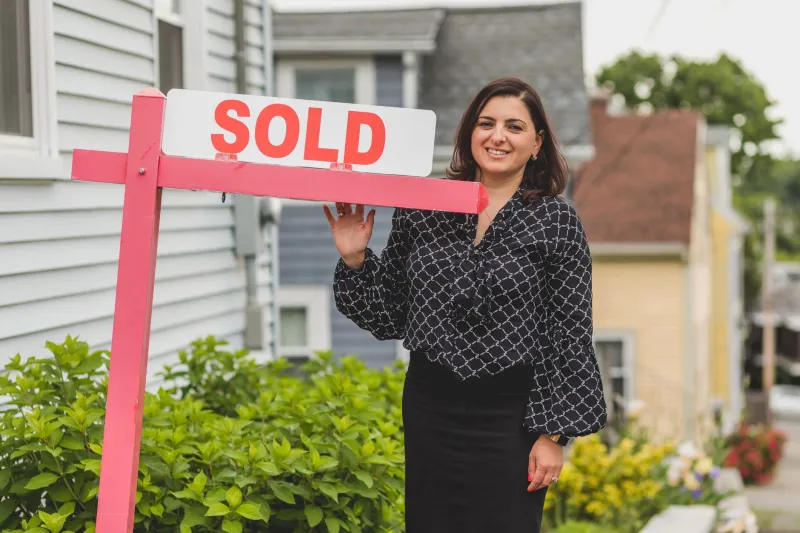
Nobody sits at a closing table thinking, this is the moment I start building generational wealth. Most first-time buyers are just trying to stop paying rent, get a yard for the dog, and find enough room for a guest bedroom. But for a surprising number of Hanover families, that practical, unglamorous starter home turned into something far more powerful over time — a financial foundation that's still paying dividends today.
If you've been on the fence about buying in Hanover because the home you can afford right now feels too small, too ordinary, or not quite enough — this one's for you.
The Quiet Math Behind Hanover's Appreciation Story
Real estate appreciation isn't magic. It's the result of a community becoming more desirable over time — better infrastructure, stronger schools, growing local businesses, and an influx of families who want to stay. Hanover has been checking those boxes consistently for years, and the numbers reflect it.
Families who purchased homes in established Hanover neighborhoods in the mid-2000s — even during a period that nationally felt risky — saw their property values climb steadily rather than spike and crash. That's because Hanover's growth has been driven by genuine community demand, not speculative flipping. People move here, put down roots, and stay. That kind of organic growth creates durable appreciation, the type that builds real equity rather than paper gains that evaporate in a downturn.
Consider a family that bought a three-bedroom, two-bath home in one of Hanover's established neighborhoods around 2007 for roughly $220,000. That same home today — with minimal upgrades and normal wear — is likely valued somewhere between $380,000 and $420,000 depending on the specific block and condition. That's not a flip. That's not a renovation project. That's just what happens when a community grows in the right direction and a family holds on.
Established Neighborhoods vs. Newer Developments: A Tale of Two Timelines
One of the more interesting dynamics in Hanover's real estate market is how appreciation plays out differently depending on when and where a neighborhood was developed.
In Hanover's older, more established neighborhoods — the ones with mature trees lining the sidewalks, well-worn community parks, and neighbors who've known each other for a decade — appreciation tends to be steadier and more predictable. There's a track record. Buyers know what they're getting, and that certainty commands a premium.
Newer developments, on the other hand, offer their own version of upside. Early buyers in a brand-new Hanover community often get in at the lowest price point before the neighborhood's identity is fully formed. If the development delivers on its promise — quality construction, good community planning, proximity to amenities — those early buyers can see significant appreciation as the neighborhood matures and demand catches up.
The key difference is timeline and certainty. Established neighborhoods offer proven appreciation with lower risk. Newer communities offer higher potential upside but require more patience and some tolerance for the unknown. Both paths can lead to substantial equity — the right choice depends on your family's timeline and financial goals.
What "Forced Appreciation" Actually Means for Real Families
You'll hear this term thrown around in real estate investing circles, but it applies just as much to regular homeowners. Forced appreciation refers to value you create through intentional improvements rather than just waiting for the market to do its thing.
For Hanover families, this has looked like finishing a basement to add livable square footage, updating a kitchen with mid-range finishes, or converting an underused garage into a functional home office. None of these are luxury renovations. They're practical upgrades that make a home more livable and more valuable — often returning more than their cost when it comes time to sell or refinance.
One pattern we see frequently: families buy a starter home in Hanover with the intention of moving up in five years. Ten years later, they're still there — because they kept improving the home, the neighborhood kept improving around them, and suddenly the equity they'd built made a lot more financial options available. Some used that equity to fund a child's college education. Others leveraged it to purchase a second property. A few simply stayed put and let the wealth accumulate quietly in the background.
The Generational Piece That Most People Miss
Here's where the starter home story gets genuinely interesting from a legacy perspective.
Families who bought in Hanover 15 to 20 years ago and held their homes didn't just build their own financial security — they created options for their kids. A paid-down or paid-off home is an asset that can be passed down, borrowed against, or sold to fund a down payment for the next generation. That's not a small thing in today's housing market, where first-time buyers face serious affordability challenges.
When a parent can help an adult child with a down payment funded by decades of home equity, the cycle continues. The next generation enters the market earlier, starts building equity sooner, and the family's overall financial position compounds over time. It doesn't require a trust fund or an inheritance. It requires one family making a smart real estate decision and holding on long enough for it to matter.
This is exactly the kind of outcome that community-focused development is designed to support. When builders invest in neighborhoods thoughtfully — with quality construction, smart planning, and genuine attention to long-term livability — they're not just building houses. They're building the conditions under which families can thrive financially for decades.
So What Does This Mean If You're Buying Today?
If you're looking at a Hanover home right now and feeling like it's not quite your dream house, it might be worth reframing the question. The right question isn't is this the home I always imagined? The better question is is this a home in a community that's going to grow in value, and can I hold it long enough to benefit?
Starter homes in strong communities have a track record of outperforming expectations. The families who built the most equity in Hanover weren't necessarily the ones who bought the biggest homes or made the flashiest renovations. They were the ones who bought in the right place, stayed committed, and let time do its work.
The equity gold mine isn't hidden in some secret corner of the market. It's been sitting right here in Hanover all along — in the modest homes, the growing neighborhoods, and the families patient enough to let a good investment become a great one.